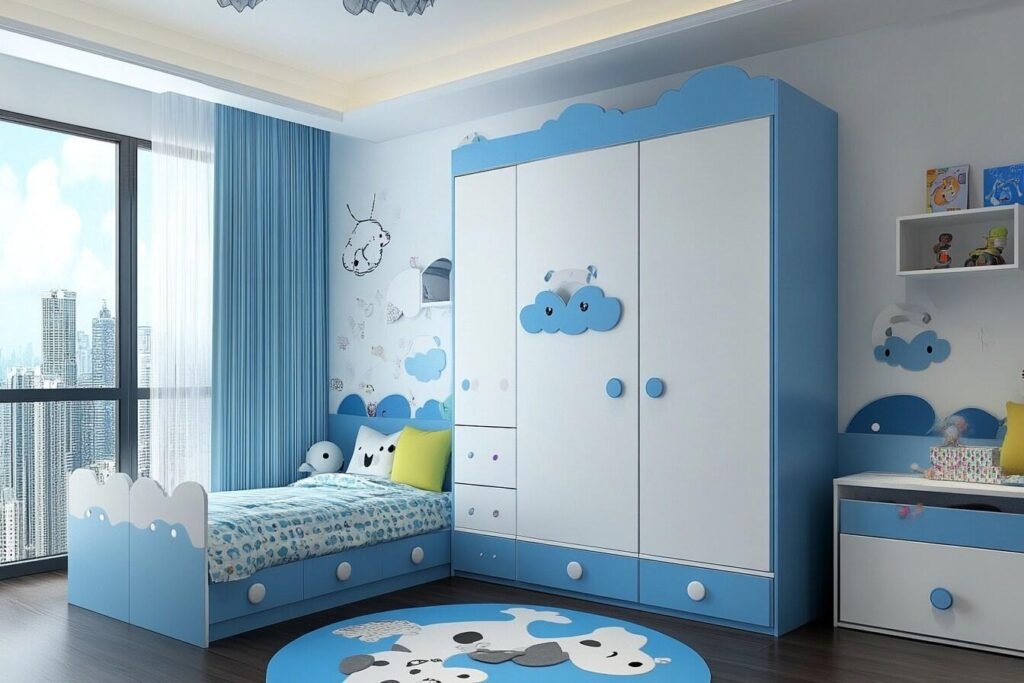
Small rooms are a reality for many Pakistani families. Whether you live in a flat or a modest house, making a small room feel functional, comfortable, and not cramped requires thoughtful planning.
Here are layouts and strategies that genuinely work.
Measure Before You Do Anything
I cannot stress this enough. Write down the exact dimensions of your room before visiting any furniture store. Know where the door is, which direction it opens, where the windows are, and where the electrical points are. These fixed elements will determine your layout options.
The Corner Bed Rule
In small rooms, placing the bed in a corner (against two walls) immediately frees up more open floor space than placing it in the center or against just one wall. A corner placement also makes the child feel more secure and cocooned, which often improves sleep.
Bunk Beds Double the Sleeping Surface, Not the Footprint
If two children share a small room, a bunk bed is the obvious solution – two beds in the floor space of one. But even for a single child, a bunk-style bed where the lower level is a play area, wardrobe, or study desk is a brilliant space-saving design.
These are often called “mid-sleeper” or “cabin beds” and they use vertical space very efficiently.
Storage Under the Bed is Non-Negotiable
In a small room, every bit of floor space that can double as storage should. A bed with two or three deep storage drawers underneath can replace a separate storage chest or small wardrobe. Use these drawers for seasonal clothes, extra bedding, toys, or sports equipment.
Wall-Mounted Shelves Instead of Floor Standing
Floor-standing bookshelves take up precious floor space. Wall-mounted shelves do the same job without touching the floor. Mount them above the desk, above the headboard, or on any blank wall. Keep them at a height the child can reach independently.
Avoid Blocking Natural Light
In small rooms, light makes an enormous difference to how spacious the room feels. Keep furniture away from windows as much as possible. Use light colours for walls and furniture – white, cream, light grey, or pastels make a small room feel larger.
The Multi-Function Furniture Principle
In a small room, every piece of furniture should ideally serve more than one purpose:
- Bed with storage underneath
- Study table that folds against the wall when not in use
- Ottoman that opens for storage inside
- Wardrobe with built-in mirror eliminating the need for a separate dressing table