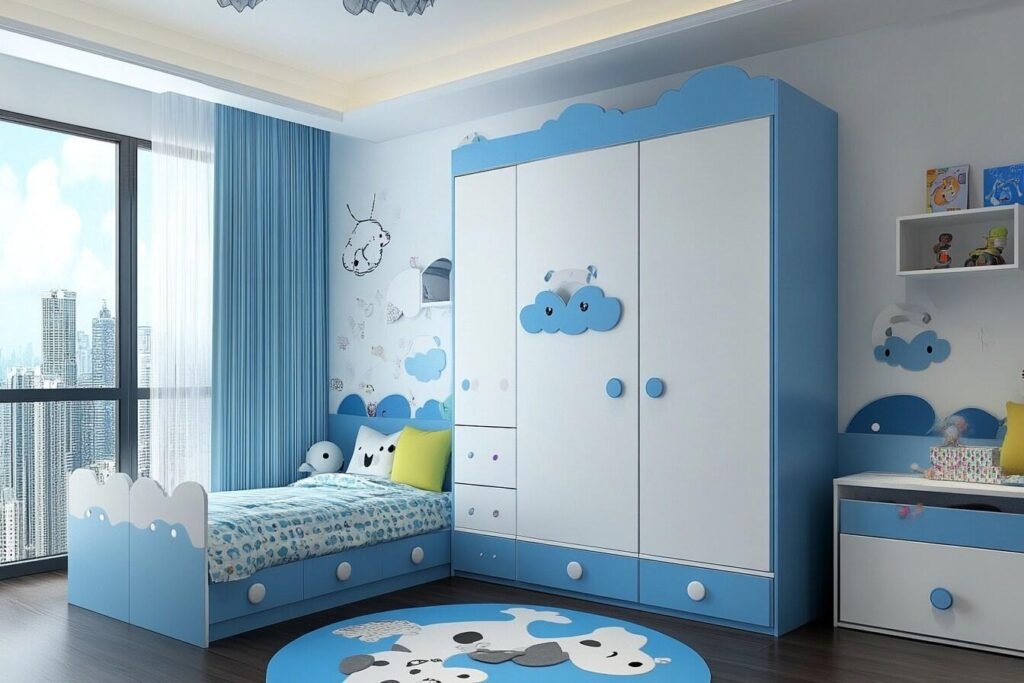
Lighting is one of the most overlooked elements of a children’s bedroom. Most parents think about it only in terms of “is there enough light to see?” But children’s bedroom lighting affects sleep quality, study performance, eye health, and even mood. Getting it right makes a genuine difference.
Three Types of Lighting Every Kids Room Needs
Ambient lighting – the main room light. This is what you use when the room needs to be fully illuminated for play and activity. In most Pakistani homes this is a ceiling fan with lights or a single ceiling light fixture. Make sure it is bright enough to fully illuminate the room without dark corners.
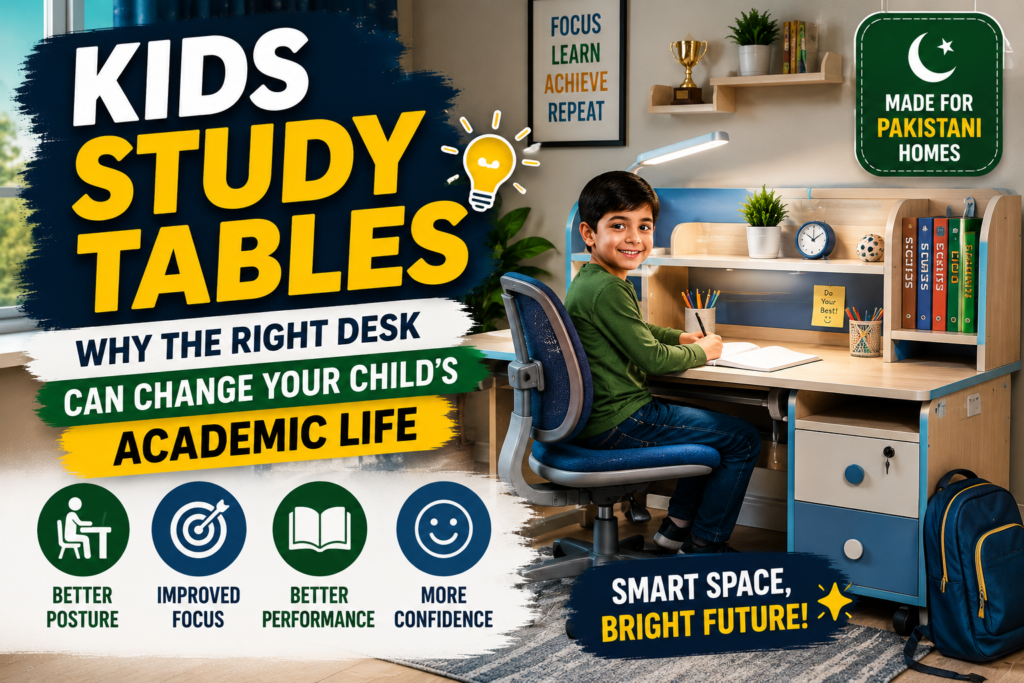
Task lighting – a dedicated desk lamp for studying. This is essential. A child doing homework in the light of the main ceiling fixture gets inadequate, indirect light at their workspace. A proper desk lamp positioned correctly provides focused, even light exactly where it’s needed.
Night lighting – a soft, dim light for nighttime. A small nightlight or LED strip behind the headboard provides enough light for a child who needs comfort without disrupting sleep with a bright overhead light.
The Right Colour Temperature
Light bulbs come in warm, neutral, and cool tones measured in Kelvin.
Warm white (2700K-3000K): Cosy and relaxing. Perfect for ambient lighting in a bedroom and for nightlights. Creates a calm atmosphere conducive to sleep.
Cool white or daylight (4000K-6500K): Bright and focused. Better for task lighting at the study desk as it improves alertness and reduces eye strain during study.
Avoid: Very blue-toned lights (high Kelvin) in a bedroom as they suppress melatonin and interfere with sleep.
Desk Lamp Positioning
The lamp should be on the opposite side to the child’s writing hand – on the left for a right-handed child – so their hand doesn’t cast a shadow on their work. The lamp should be at eye level or slightly above, pointing toward the work surface rather than toward the child’s eyes.
Night Lights for Children
Many children are genuinely afraid of the dark – this is a completely normal developmental phase that can last from age 2 to 8 or beyond. A warm, dim nightlight near the bed provides enough comfort without significantly disrupting sleep. Look for nightlights with a warm amber or orange tone rather than white or blue.
Some children prefer a small LED strip behind the headboard or under the bed frame – this creates a gentle ambient glow that is both practical and looks beautiful.
Energy Efficiency in Pakistan’s Context
Given Pakistan’s electricity costs and load-shedding challenges, LED bulbs are the obvious choice throughout a child’s room. They use a fraction of the electricity of older bulb types, produce very little heat (important in Pakistani summers), and last many years. Rechargeable LED desk lamps that work during load-shedding are a particularly practical choice.