Walk into a paint shop and the choices are overwhelming. Hundreds of shades, finishes, and combinations. And when it comes to a child’s bedroom, most parents just pick their child’s favourite colour and paint the whole room that shade. Sometimes it works. Often it doesn’t. Here’s what actually matters when choosing colours for a kids room – and what science and experience both agree on.
Why Colour Affects Children More Than Adults
Children’s brains are still developing their emotional regulation systems. Colour has a measurable effect on mood, energy levels, and the ability to relax and sleep. What feels like a mild background detail to an adult can be genuinely overstimulating for a child who has to eat, sleep, study, and play in the same space all day.
Red – Energising but Problematic for Bedrooms
Red is the colour of energy, excitement, and appetite. It raises heart rate and increases alertness. For a playroom or a sports-themed accent wall, red can work brilliantly. For a bedroom where a child needs to wind down and sleep, it is one of the worst choices. Children in red rooms often have more trouble falling asleep and staying asleep. Use red as an accent only — a cushion, a bookshelf, a lamp — not as a wall colour.
Blue – The Best Overall Choice for Kids Bedrooms
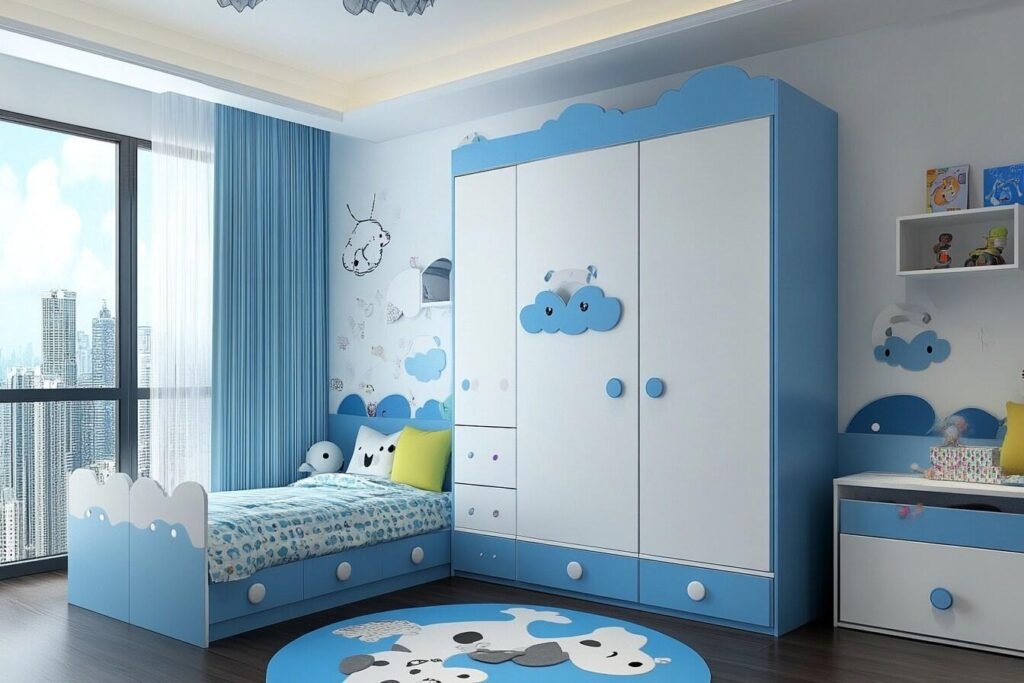
Multiple studies in colour psychology consistently identify blue as the most sleep-supportive colour. It lowers heart rate and creates a calm, safe feeling. Light blue and sky blue are perfect for kids bedrooms. Navy blue works beautifully for older children and teens. Blue is gender-neutral despite old cultural associations and works brilliantly with white furniture.
Green – Balanced and Calming
Green sits in the middle of the visible spectrum and requires no adjustment from the eyes, making it the least visually tiring colour. Soft greens – sage, mint, and seafoam – create calm, balanced environments. Green is associated with nature and growth, which are genuinely positive associations for a child’s room.
Yellow – Tricky to Use Correctly
Yellow is cheerful and associated with happiness, which makes it tempting for kids rooms. But bright, saturated yellow is highly stimulating and can cause irritability in children when used excessively. Pale, muted yellow – closer to cream – works much better. Think warm lemon rather than neon sunshine.
Pink and Lavender – Calming and Popular
Soft pink and lavender are genuinely calming colours that work well in bedrooms. The key is keeping the tone soft. Hot pink behaves more like red — stimulating rather than calming. Pale blush pink, dusty rose, and soft lavender are all excellent bedroom choices.
Avoid Very Dark Colours
Dark colours make small rooms feel smaller and can feel heavy and oppressive in a space where a child spends many hours. If you love a deep colour, use it on one accent wall only and keep the other three walls light.
The Practical Rule
Paint three walls in a soft, muted colour and use the fourth wall or the furniture to introduce the child’s favourite bolder colour. This way the room has personality without being overwhelming. At Wali Kids Furniture, our furniture is available in colours carefully chosen to complement the most popular bedroom wall colours in Pakistani homes.