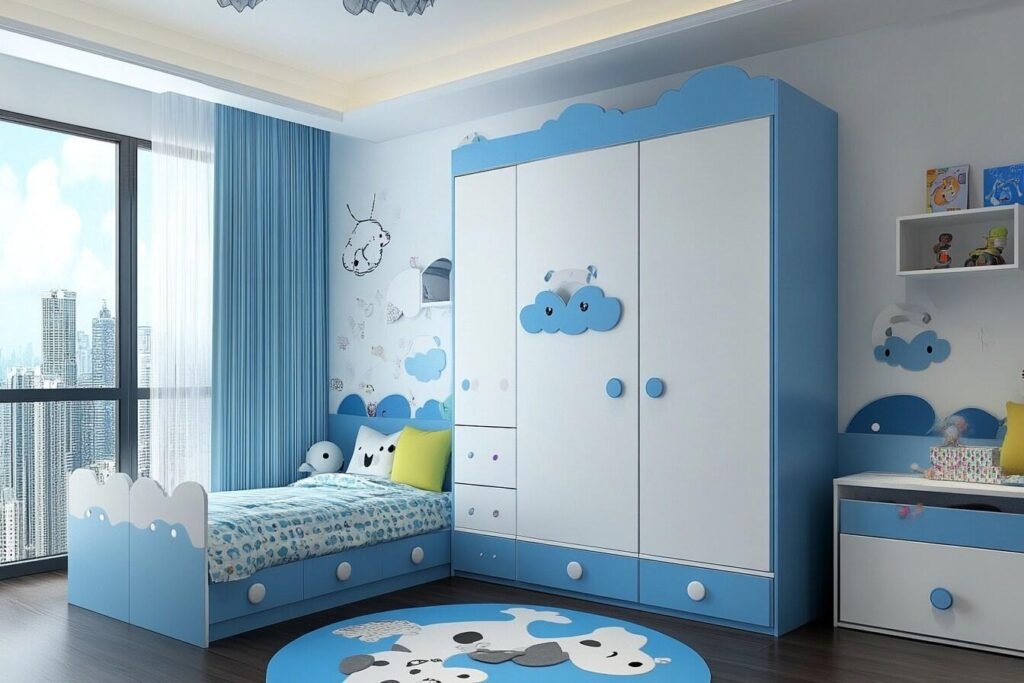
Setting up a child’s bedroom is one of the most enjoyable projects a parent can take on. Done right, it becomes a space where your child feels safe, sleeps well, plays freely, studies with focus, and develops their personality. Done wrong, it becomes a cluttered, chaotic room that nobody wants to spend time in.
Here is a step-by-step guide to setting up a kids bedroom that actually works.
Start with a Plan, Not a Purchase
Before you buy anything, stand in the room with a measuring tape. Write down the dimensions. Sketch a rough layout on paper. Think about:
- Where will the bed go?
- Where will the wardrobe go?
- Does the child need a study area?
- Is there a window and how does light come in?
- Where are the electrical points?
Most parents in Pakistan make the mistake of buying furniture first and then trying to fit it into the room. This leads to overcrowding and poor arrangement.
The Bed is the Anchor
The bed should be the first decision. It takes up the most space and determines where everything else goes. In Pakistani homes, placing the bed against a wall or in the corner is common, which is practical and safe. Avoid placing the bed directly under a window.
For a child under 7, a single bed with storage drawers is ideal. For two kids in one room, a bunk bed is your best option.
Create Zones in the Room
Even small rooms can have zones if you plan carefully:
- Sleep zone – the bed, with minimal items nearby to keep sleep associations calm
- Study zone – a desk, chair, and good lighting, ideally away from the bed
- Play zone – floor space, a rug, and toy storage nearby
- Storage zone – wardrobe, shelves, and drawers
When each area of the room has a purpose, children intuitively understand when it is time to study, play, or sleep.
Colour and Theme
Children respond strongly to their environment. Bright primary colours like red, yellow, and orange are energising but can make it hard to wind down for sleep. Softer tones like light blue, mint green, lavender, or warm cream are better for bedrooms. You can add pops of your child’s favourite colours through bedding, cushions, or wall art without painting every wall.
Avoid very dark colours in kids rooms – they make small spaces feel smaller and can feel gloomy.
Storage – You Can Never Have Enough
Toys, books, sports equipment, school bags, clothes – kids accumulate stuff rapidly. Plan storage from the very beginning. A wardrobe with both hanging space and shelves is essential. Under-bed drawers are brilliant for extra clothes or spare bedding. A bookshelf near the study area keeps school books organized.
Wall-mounted shelves are a great space-saver in smaller rooms.
Safety Checks for the Room
- Cover all electrical sockets at child height with safety caps
- Secure heavy furniture like wardrobes and bookshelves to the wall so they cannot tip over
- Avoid glass surfaces at child height – mirrors should be mounted high
- Ensure windows have safety locks if the room is above ground floor
Involve Your Child
Children as young as 3 or 4 can have opinions about their room. Ask them what colour they like. Show them options for their bed design. Let them choose their bedding. When a child feels that their room is truly theirs, they take better care of it and feel more settled.