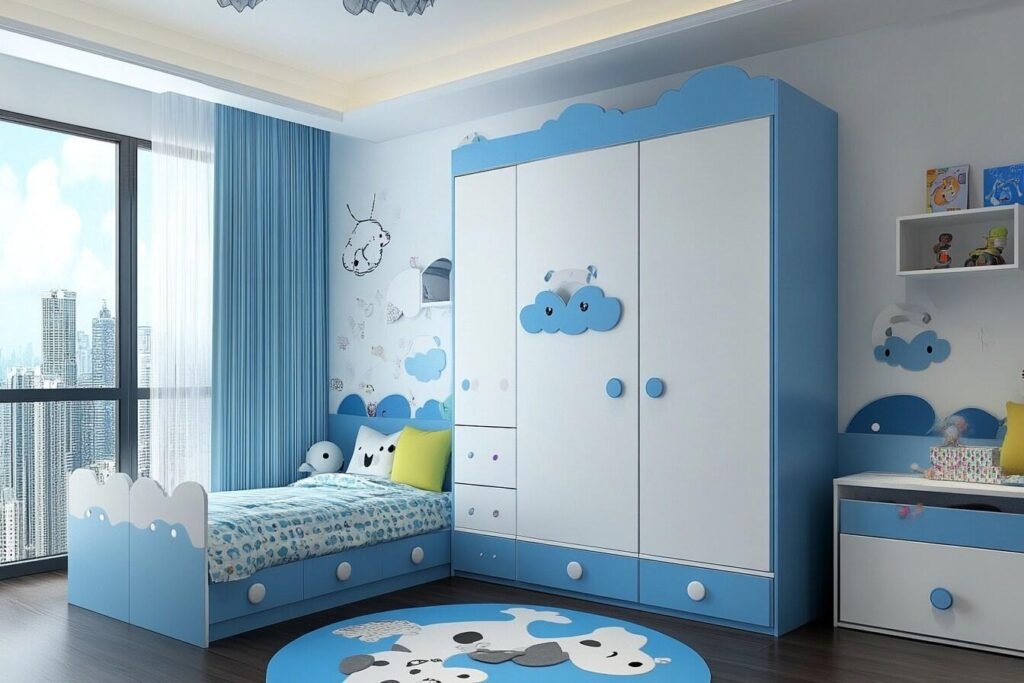
Two children sharing a room is incredibly common in Pakistan. But what happens when the two children have very different personalities, ages, or needs? One is a light sleeper and the other kicks everything at night. One is tidy, the other is a tornado. One wants a princess theme, the other wants cars.
Making a shared bedroom work is a challenge – but it is absolutely solvable with the right approach.
Acknowledge That It Is Hard
First, acknowledge the situation honestly. Sharing a room requires compromise from both children. If one child is significantly older, they often feel they deserve more space and autonomy. If they have different sleep schedules, one always disturbs the other. These are real challenges, not imagined ones.
Create Clear Physical Zones
The most effective strategy is dividing the room into clearly defined personal territories. Each child has their side of the room. This can be achieved with:
- A bunk bed where each child has their own level
- Two beds placed on opposite walls with a clear dividing line
- A low bookshelf or room divider placed between the two sleeping areas
- Different coloured bedding and accessories for each side
When each child feels that part of the room is genuinely theirs, conflicts reduce dramatically.
Handle Different Sleep Schedules
If one child is younger and sleeps earlier, or one is a student who studies late, this is one of the most common tension points. Solutions include:
- A small reading light with a directional beam so one child can read without disturbing the other
- Blackout blinds on the window (so light levels in the room are controlled)
- A white noise machine or fan creates enough background sound to muffle small noises
Shared Storage vs Personal Storage
Give each child their own designated storage space – their own wardrobe section, their own drawer, their own bookshelf section. Shared storage bins lead to arguments about ownership. Personal space builds respect for each other’s belongings.
A good solution is a wardrobe divided internally – each child’s clothes and belongings on their designated side.
Let Each Child Personalise Their Area
If the room has to be decorated in a shared theme, children feel resentful. Instead, use neutral walls and let each child personalise their own side. A car poster on one side, a butterfly mobile on the other – it looks eclectic but children feel respected and the room genuinely belongs to both of them.
When They Are Different Ages
A teenage sibling sharing with a younger child has legitimate privacy needs. Consider a curtain or partial divider that can be closed. Give the older child a small desk lamp and study setup so they can work without the whole room being lit. Small gestures of acknowledging their different needs go a long way.