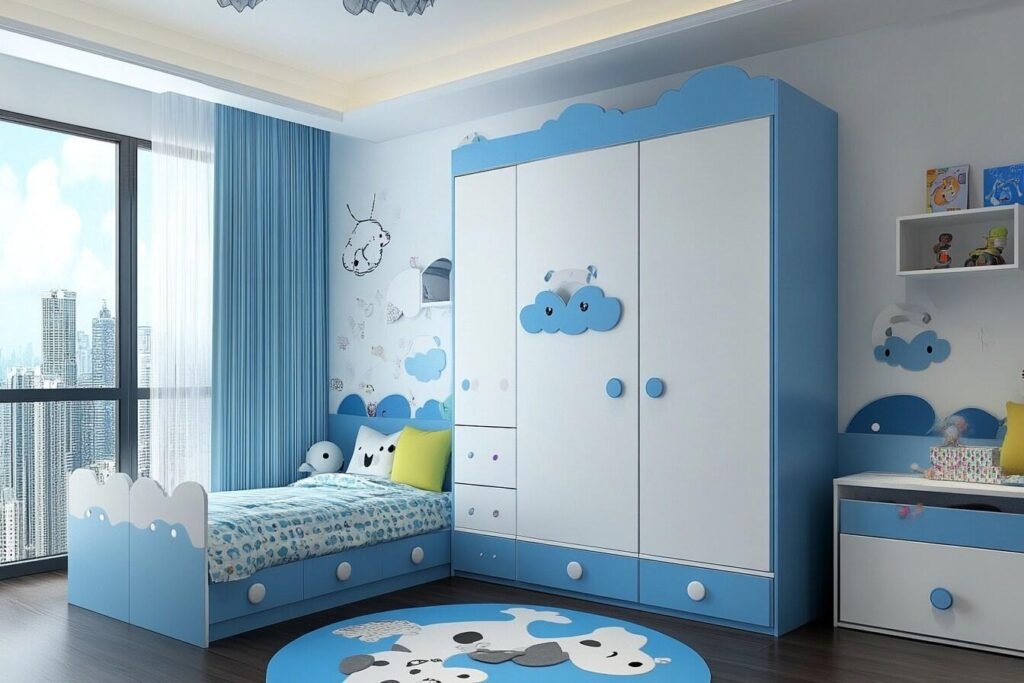
Every parent knows the scene. You spend a weekend organising your child’s room – everything in its place, the wardrobe neat, toys sorted. By Tuesday it looks like a small tornado has passed through.
Keeping a child’s room tidy is less about rules and more about systems. Here is what actually works.
Start with the Right Storage
Children cannot keep things tidy if there is nowhere logical to put them. Before you enforce any rules, make sure there is a clear home for every category of item:
- Toys go in the toy box or specific drawers
- Books go on the shelf
- School bag hangs on its hook
- Clothes go in the wardrobe
If putting something away requires effort – opening multiple doors, moving other things, reaching too high — a child will simply drop it on the floor. Make storage accessible and obvious.
The “Before Bed” Rule
The most effective habit for children’s rooms is a simple nightly routine: everything that came out during the day gets put back before bedtime. This takes 5-10 minutes at most if done daily. Left for a week, it becomes an overwhelming chore.
Do this alongside your child at first – make it a routine, not a punishment. Put on music, set a timer, make it a game. Over time, they will start doing it independently.
Age-Appropriate Expectations
- 2-4 years: Can help put toys in a box. Cannot fold clothes. Focus on one type of tidying at a time.
- 5-7 years: Can put clothes in the wardrobe, arrange books on a shelf, and tidy toys completely.
- 8-12 years: Can clean their whole room independently. Should also dust surfaces and make their own bed.
- Teenagers: Full responsibility for their room, including vacuuming and organising drawers.
Labelling Helps Younger Children
For kids under 7, put picture labels on storage boxes and shelves. A picture of a car on the toy box, a picture of books on the bookshelf. Children who cannot read yet can still follow visual cues. This makes “putting things away” a clear and manageable task.
Reward the Habit, Not the Result
When your child tidies their room without being asked, notice it and say something specific: “I love how you put your toys away before coming to dinner.” Specific praise is far more motivating for children than generic compliments. Don’t focus only on whether the room is perfectly tidy – focus on whether the habit is forming.
Keep the Room Manageable
If the room is overflowing with stuff, no system will work. Every few months, go through toys and clothes with your child. Donate what is outgrown. Throw away what is broken. A child with fewer possessions can manage their space much more easily.